
My Research
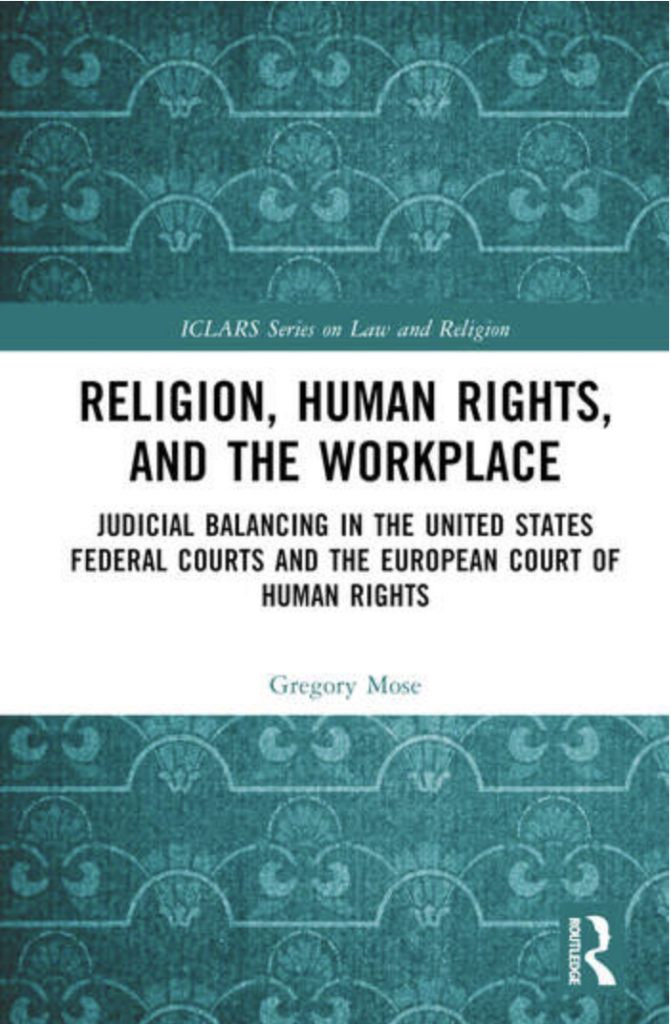
My recent research has examined the legal protection of religious and cultural identity across two intersecting fields: international human rights law and international criminal law. My doctoral work and resulting monograph explored how proportionality doctrine operates differently in American constitutional law and European Court of Human Rights jurisprudence. My current and projected research moves from that comparative base toward the public international law questions that arise when violations of religious and cultural freedoms cross the threshold from human rights violations into international crimes.
Current Research
I’m currently focused on the criminalization of identity-based persecution, ethnic cleansing, and the denial of religious practice under international criminal law, examined through the lens of the draft articles of the proposed Crimes Against Humanity Convention. The ILC’s draft articles offer an exciting opportunity to develop international legal doctrine as it relates to atrocity crimes, but at the same time raise difficult questions about the definition of protected groups, the treatment of religion and culture as bases of persecution, and the relationship between the Convention’s framework and existing international human rights obligations. They also fall short of adequately addressing the delicate balance between freedom of religion and belief on the one hand and the incitement to mass violence on the other. The next two years are crucial in the negotiation of the final version of the CAH Convention, and I hope that my research can play some role in the coming debates.
Upcoming Projects
In the medium term I expand this line of inquiry into the role cultural identity in international criminal law. My earlier work on the destruction of religious and cultural sites in Bosnia-Herzegovina (“The Destruction of Churches and Mosques in Bosnia-Herzegovina: Seeking a Rights-Based Approach to the Protection of Religious Cultural Property,” 1997) raised questions about whether international humanitarian law adequately addresses culturally-motivated destruction as a distinct form of atrocity. I hope to revisit and substantially develop this work in light of subsequent developments, especially the ICC’s judgment in Al Mahdi (2016), the ILC’s draft articles, and the ongoing destruction of cultural heritage in contemporary conflicts, in particular Ukraine.
A related line of inquiry concerns incitement as a precursor crime in international criminal law, particularly in the context of religiously and ethnically motivated violence. The crime of direct and public incitement to genocide has a defined legal framework, but incitement to persecution and other crimes against humanity has been excluded from the CAH draft articles. This means that there is significant scholarly and policy work to be done at the intersection of religious and ethnic discourse, freedom of expression, and mass violence. Moreover, I believe that the Yazidi context provides a promising case study within which to explore these issues, and I am currently developing my contacts in Iraqi Kurdistan with a few to conducting on the ground research there in future.